Does LiteMeet really run on shared hosting like cPanel or Hostinger?
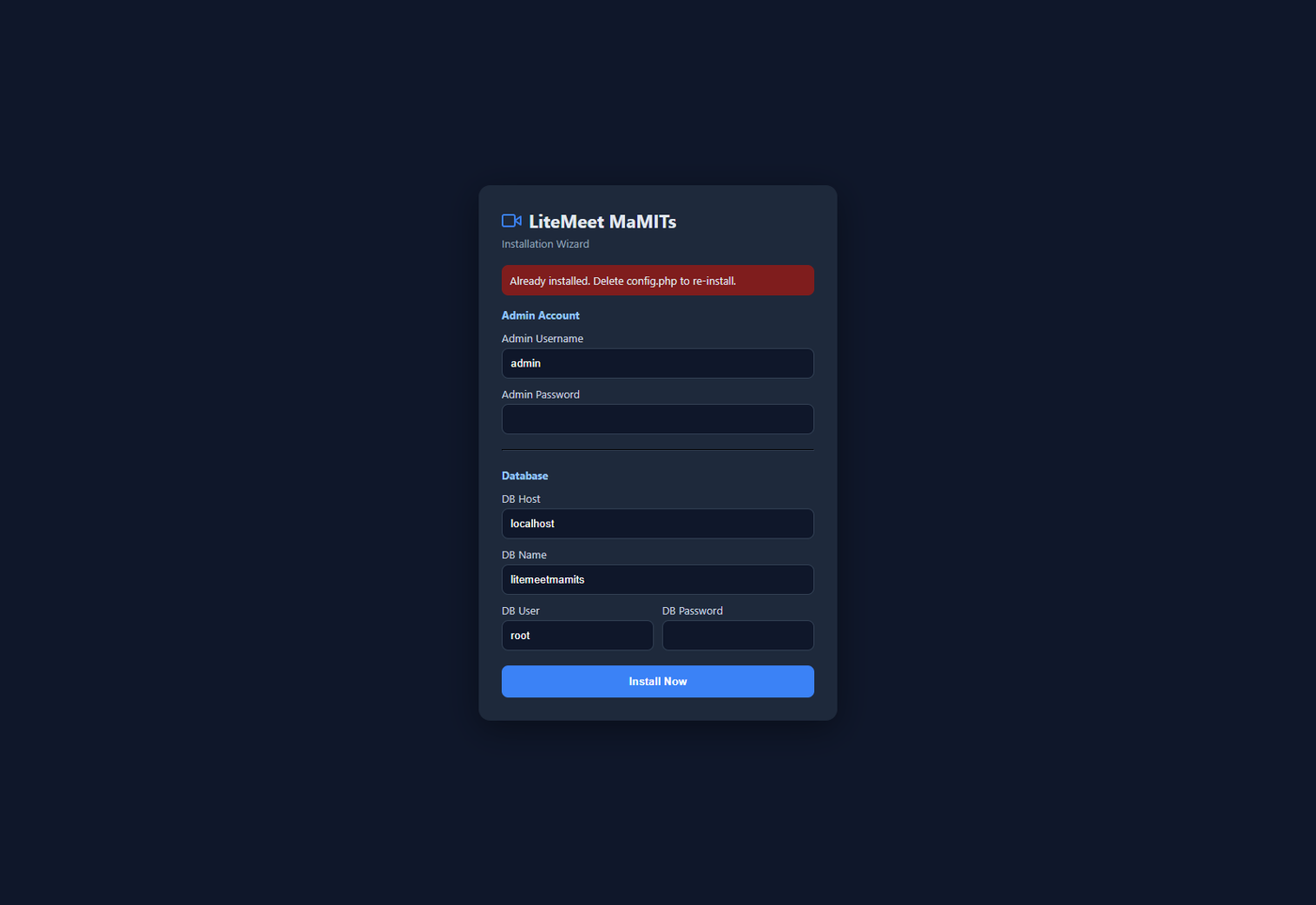
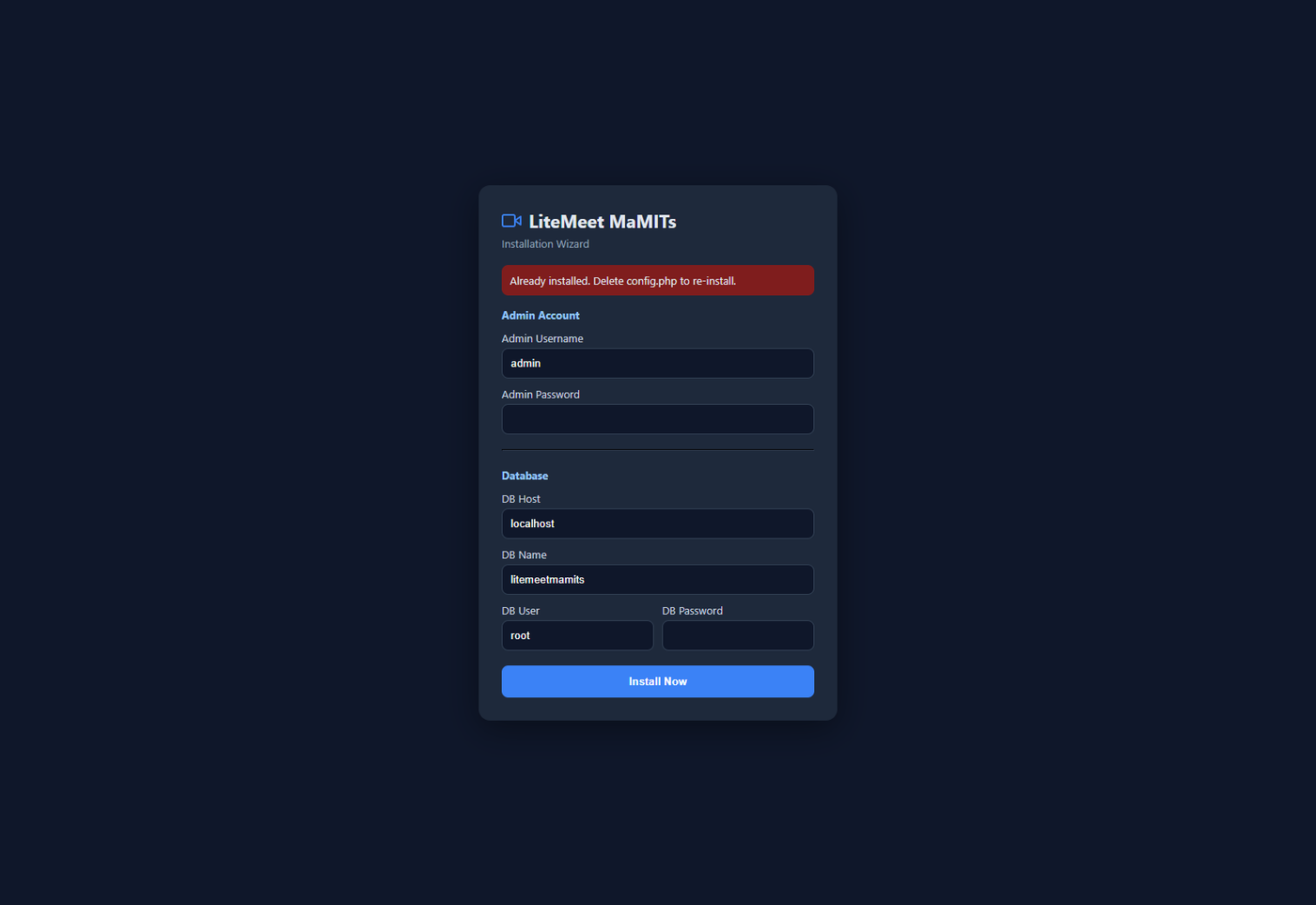
Yes. LiteMeet was designed for ordinary PHP 7.4+/8.x hosting with a MySQL or MariaDB database, the kind that comes with cPanel and Hostinger plans. It needs no media server, no Docker, no Node.js and no root access. You upload the files, open your site, and the install wizard creates the database tables and configuration automatically.
How is HD video possible without a media server?
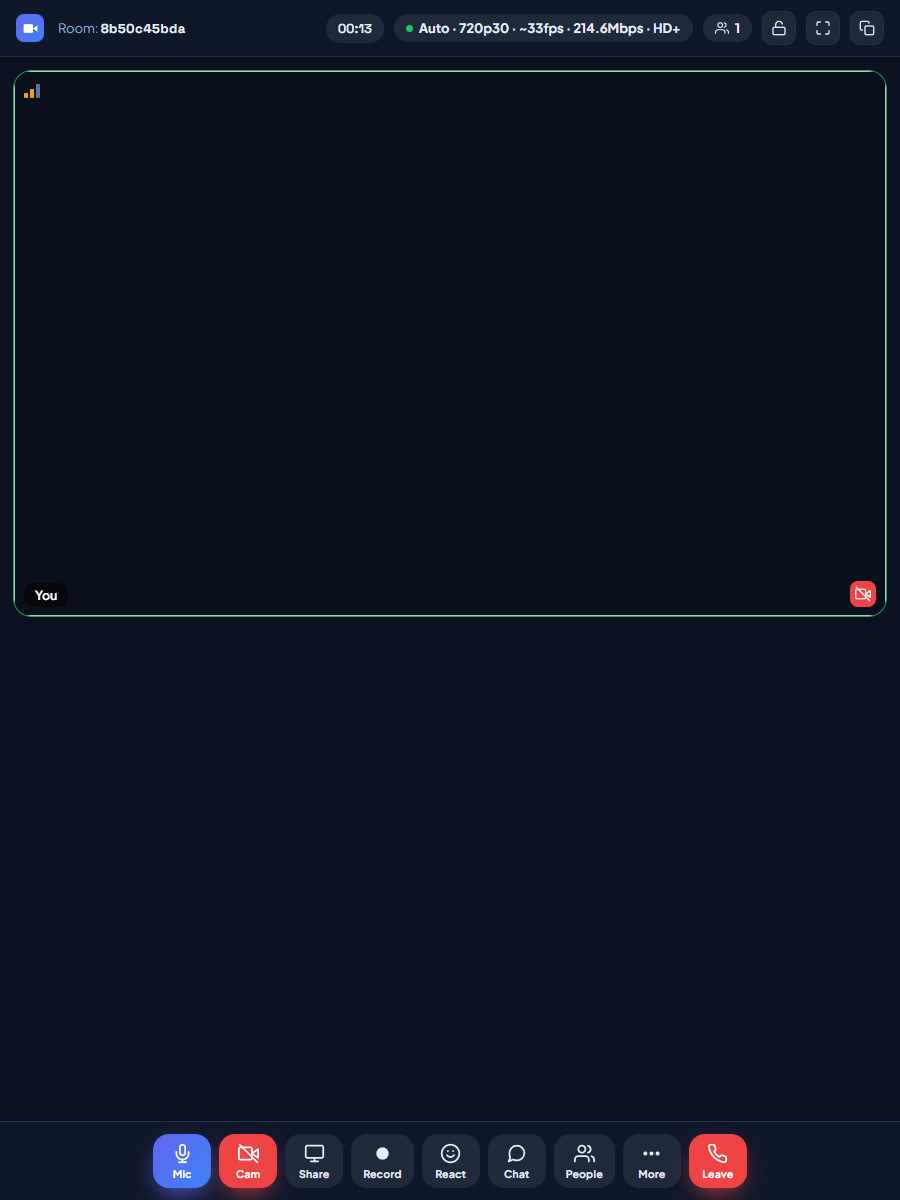
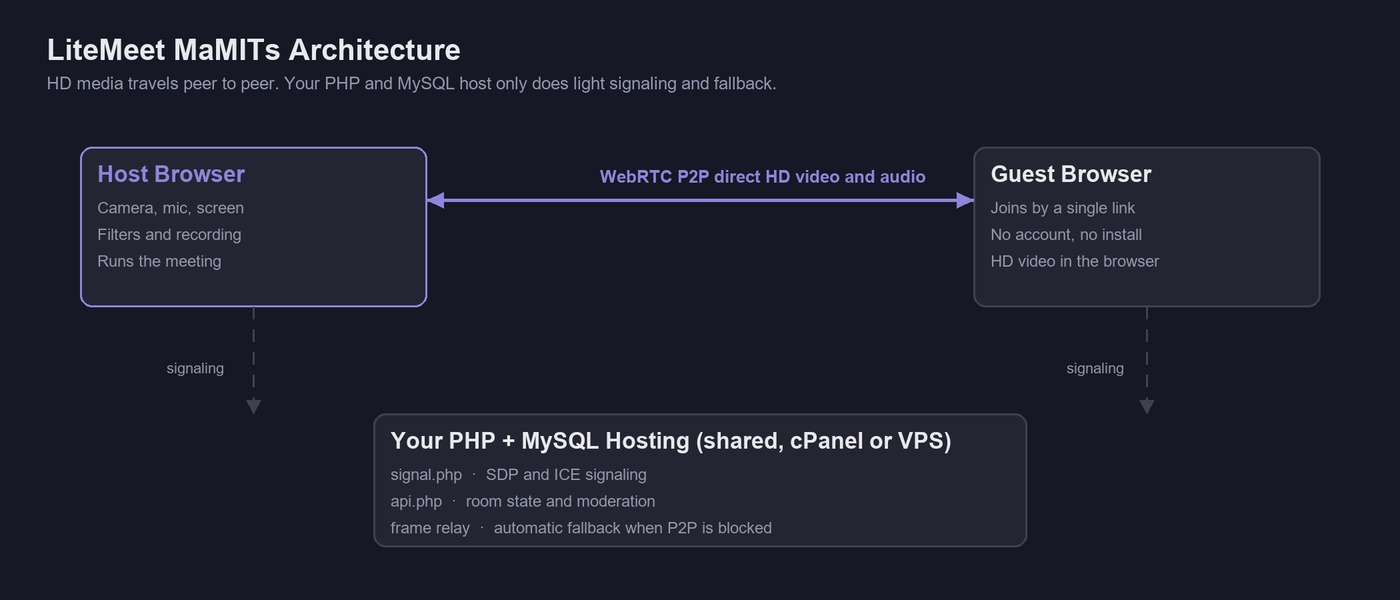
Media travels peer-to-peer over WebRTC, directly between browsers, so your server never touches the heavy video traffic. When P2P is blocked or stalls, LiteMeet automatically switches to a lightweight frame-and-audio relay on your own host and switches back the moment the connection heals, so the call never permanently freezes.
Where are recordings and chat history stored?
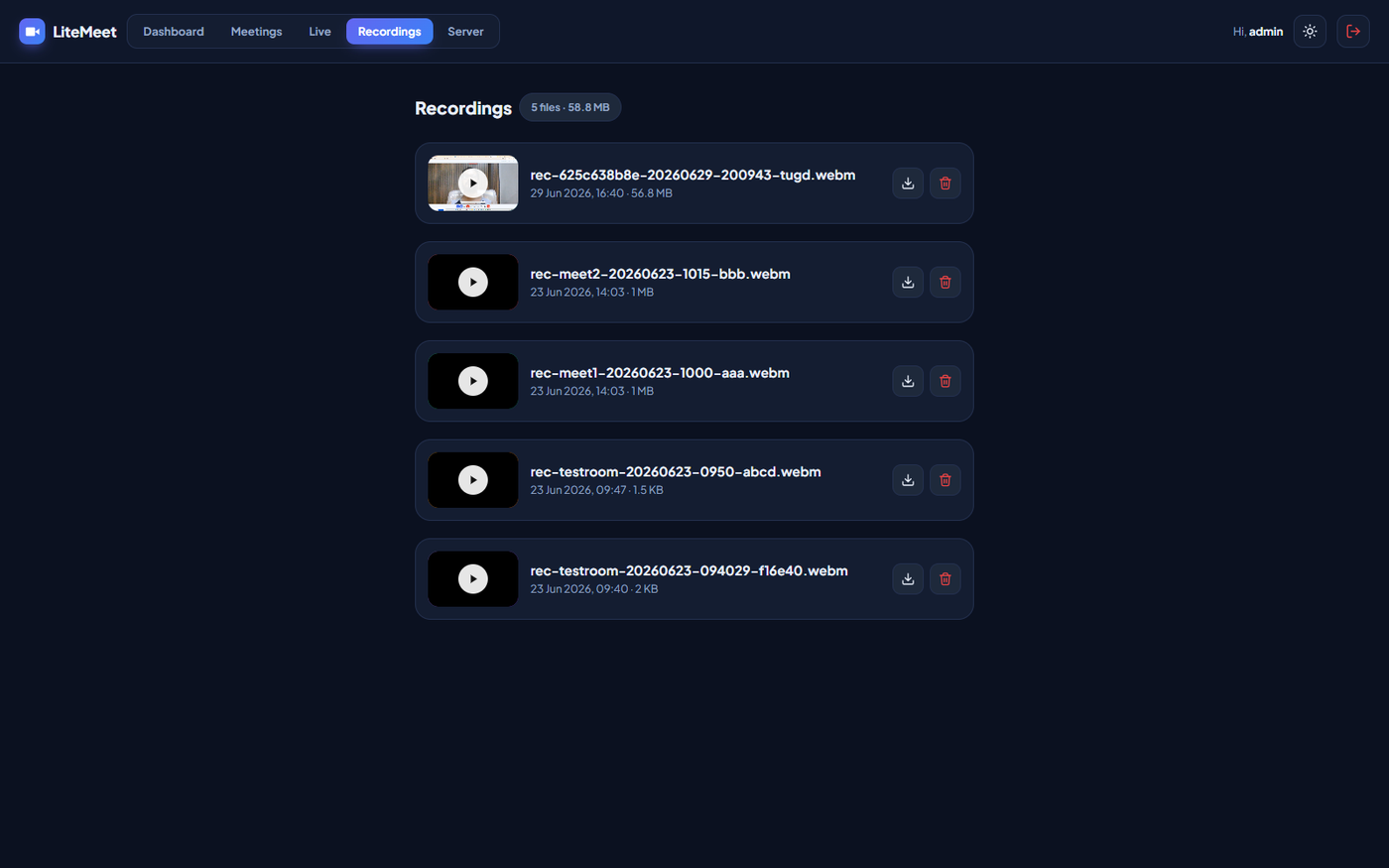
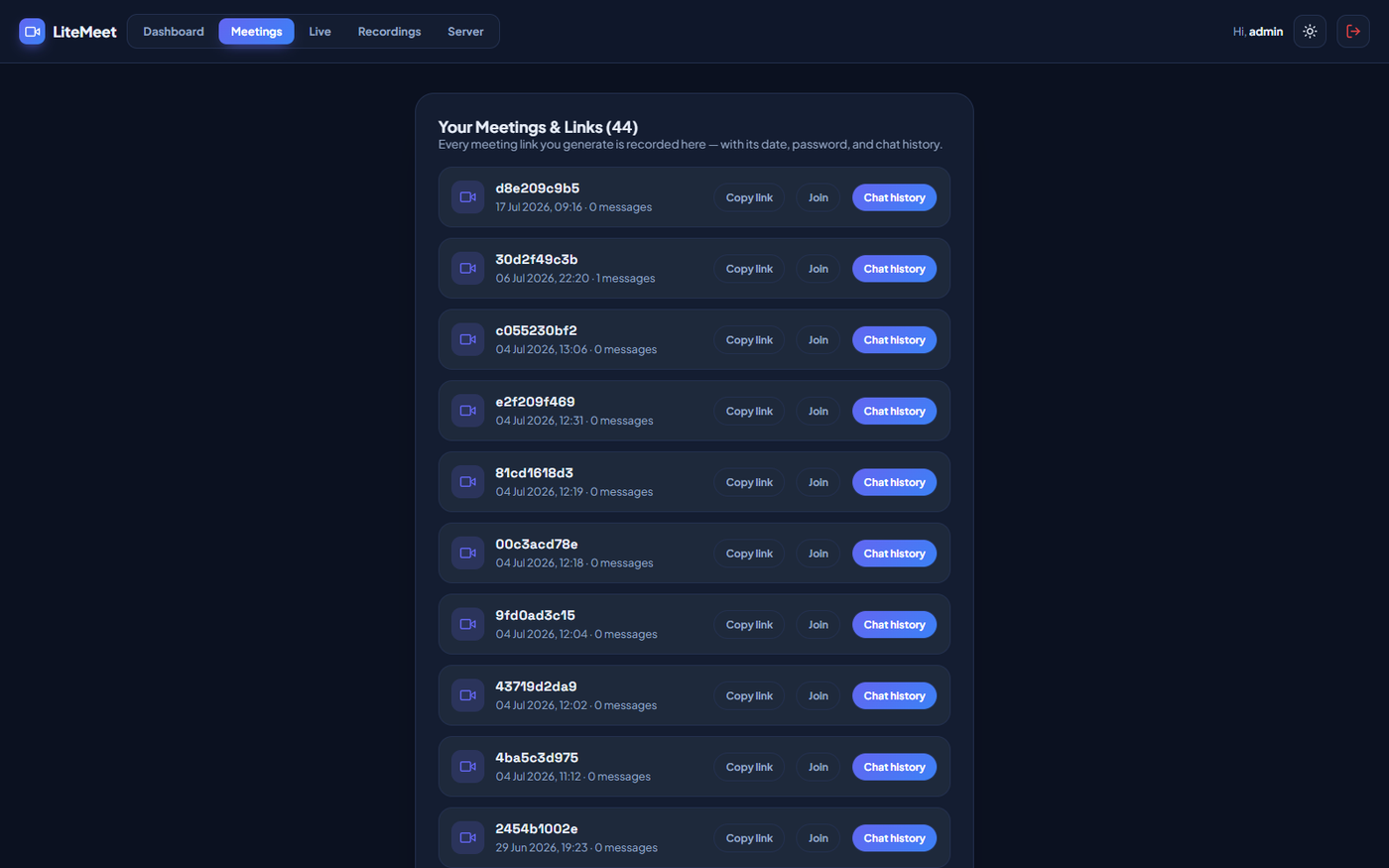
Everything stays on your server. Recordings save to a recordings folder on your own hosting, chat transcripts live in your own MySQL database, and no meeting data ever leaves infrastructure you control.
Are there any monthly or per-seat fees?
No. LiteMeet is licensed once and is yours. There is no per-seat pricing, no monthly subscription and no usage metering. Your only ongoing cost is the hosting you already pay for.
Can I white-label LiteMeet for my clients?
Yes. The product ships as 100% editable PHP and vanilla JavaScript with tokenized CSS, with no build step and no compiled bundles. Agencies and resellers routinely change the logo, name, colors and feature set, then deploy it per client on the client's own hosting.
What do participants need to join a meeting?
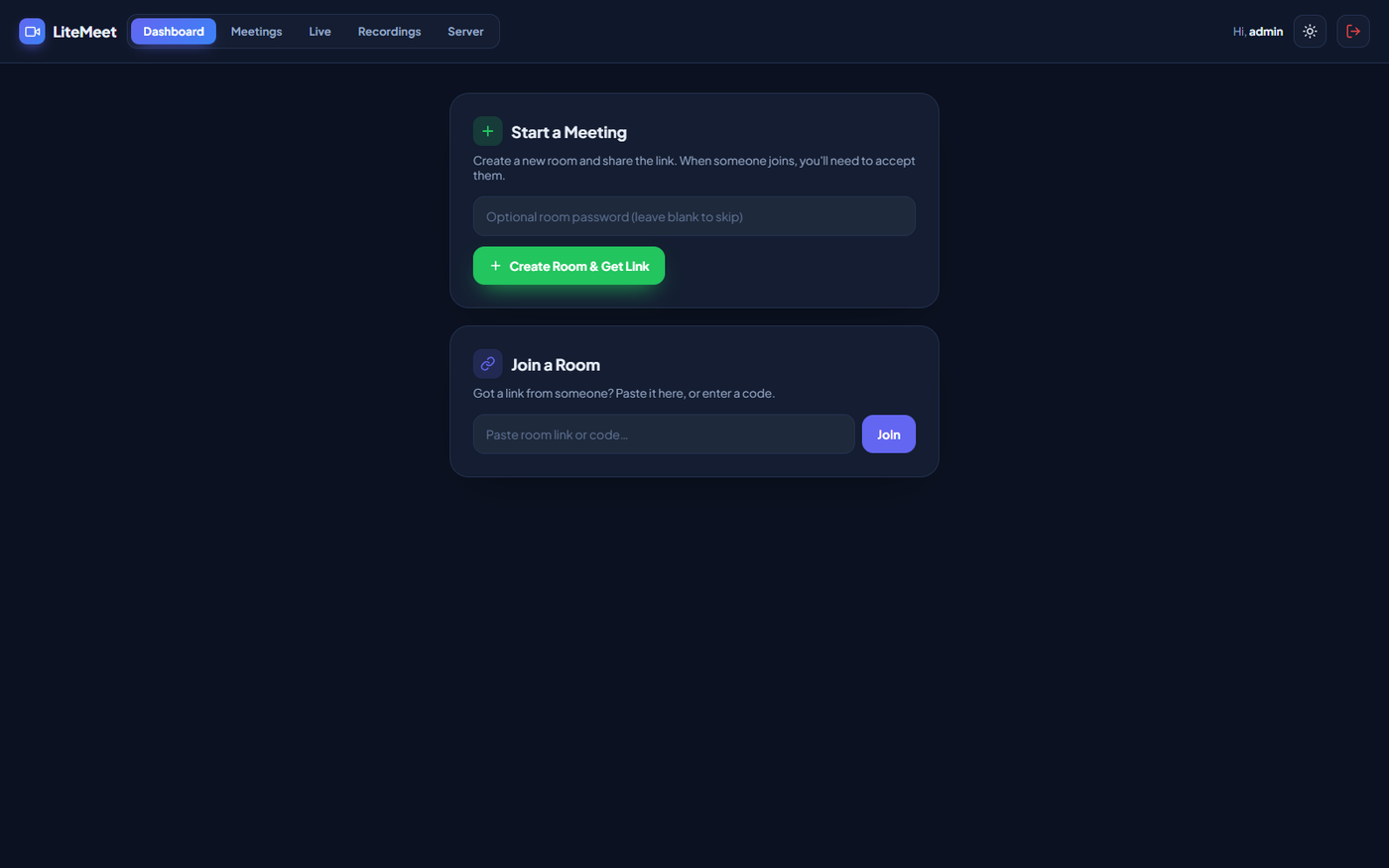
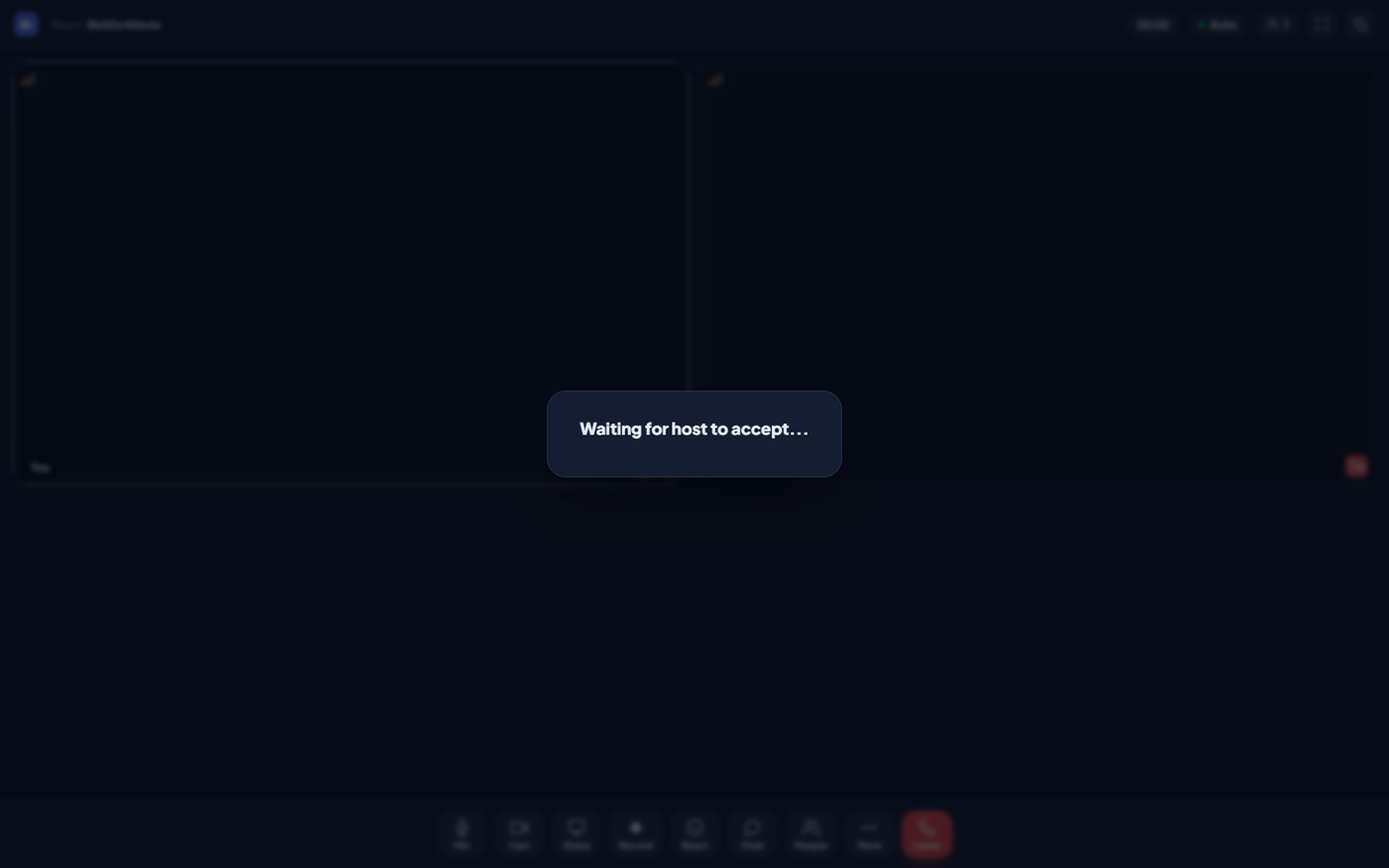
Just the link. Guests open the invite link, type a name (and the room password if you set one), and wait for the host to accept them. No account, no signup and no app install.
Does it work on mobile?
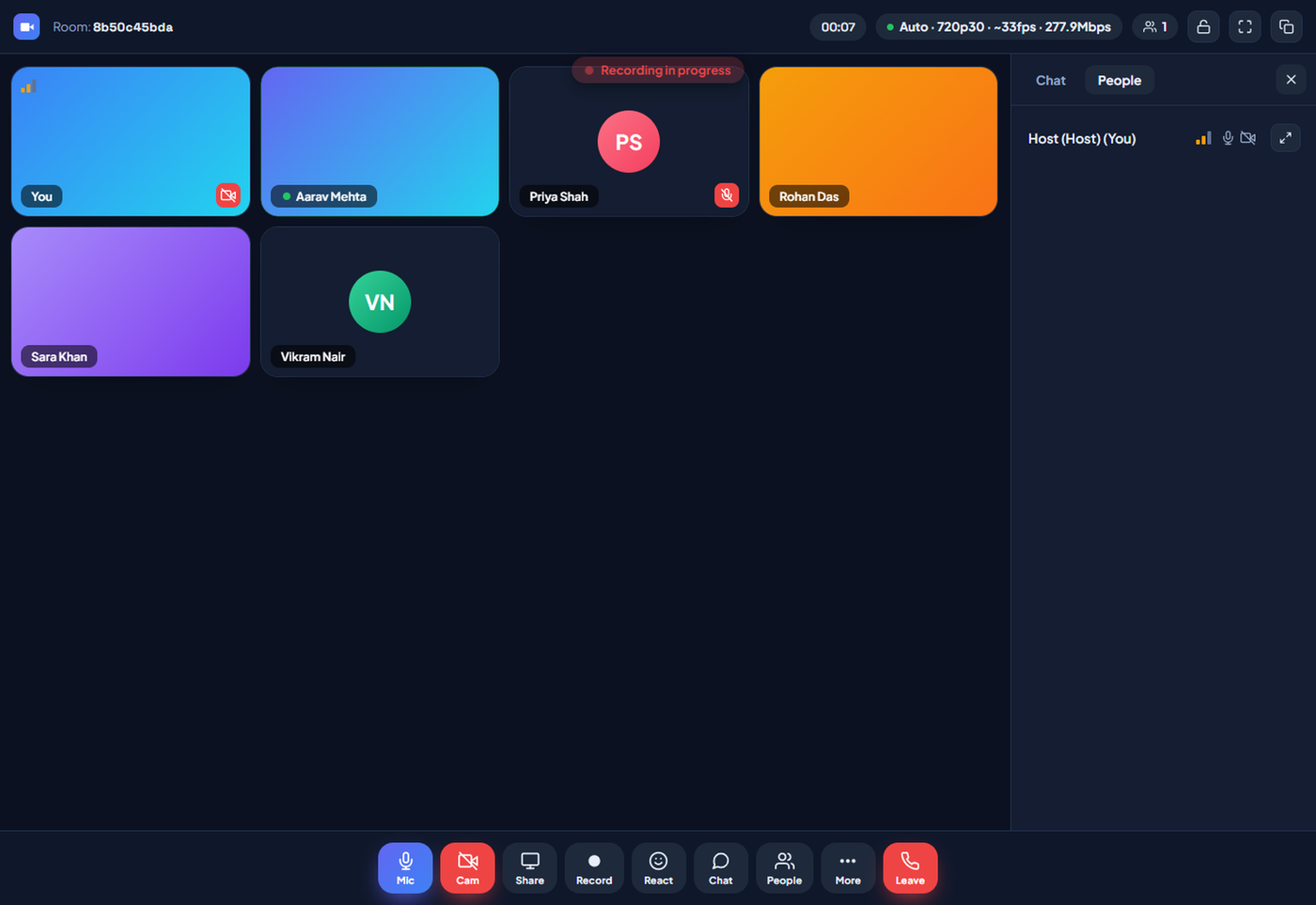
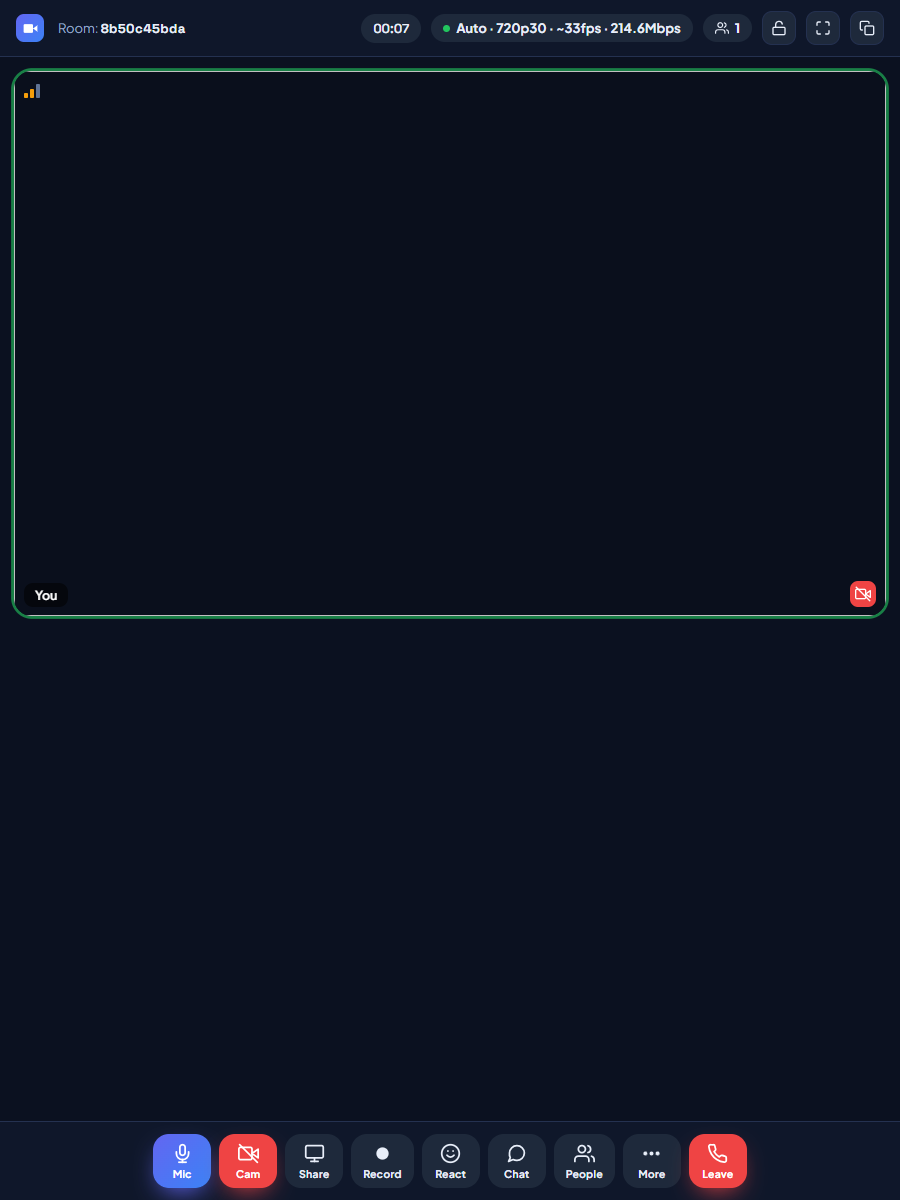
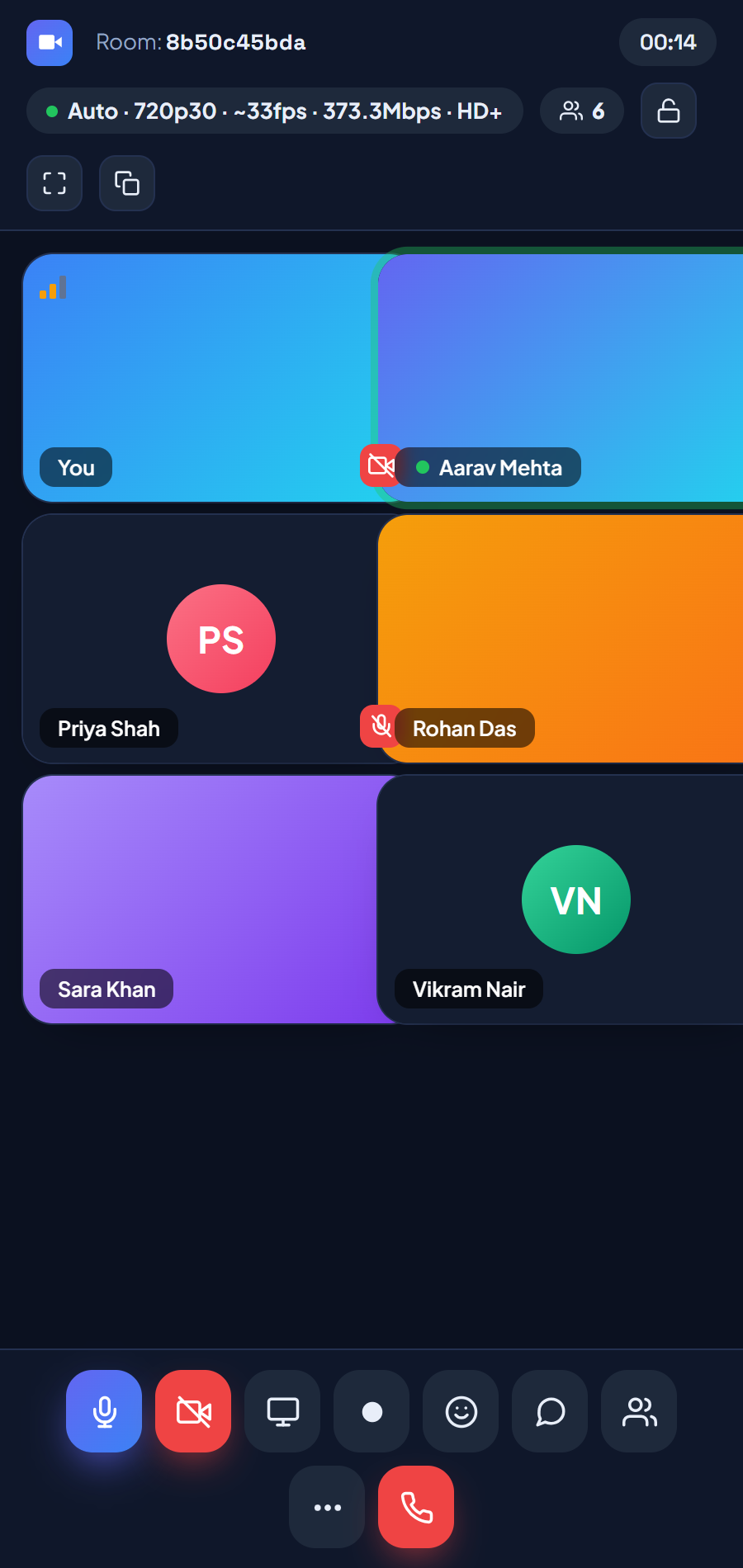
Yes. The room interface is responsive. The control dock condenses and panels go fullscreen on phones. Chrome and Edge get every feature including live captions; modern Firefox and Safari support the core meeting experience.
Is HTTPS required?
For camera and microphone access, yes, because browsers require a secure origin. Most hosts include free SSL certificates, so enable one before going live. Localhost is exempt during development.
How does the one-time license actually work?
You pay once and receive the complete, unobfuscated source: every PHP file, the single app.js, the tokenized stylesheets and the install wizard. There is no activation server, no license key that phones home, and no feature that switches off later. Because the code lives on your hosting, nothing we do, or stop doing, can take a running deployment away from you. Updates are shipped as new versions you can apply when it suits you; the upgrade-safe installer adds missing tables and columns without touching your data.
How many participants can one meeting handle?
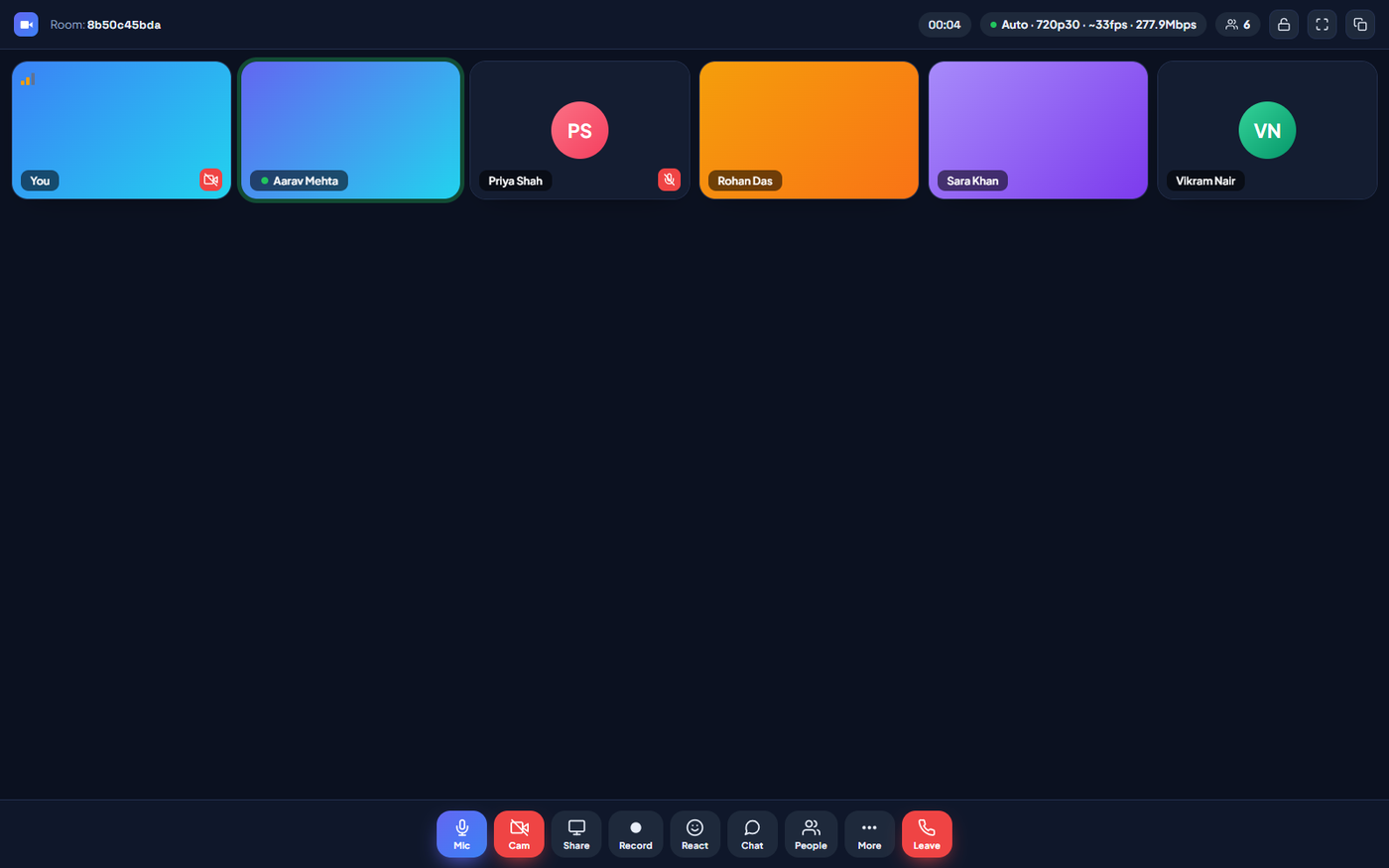
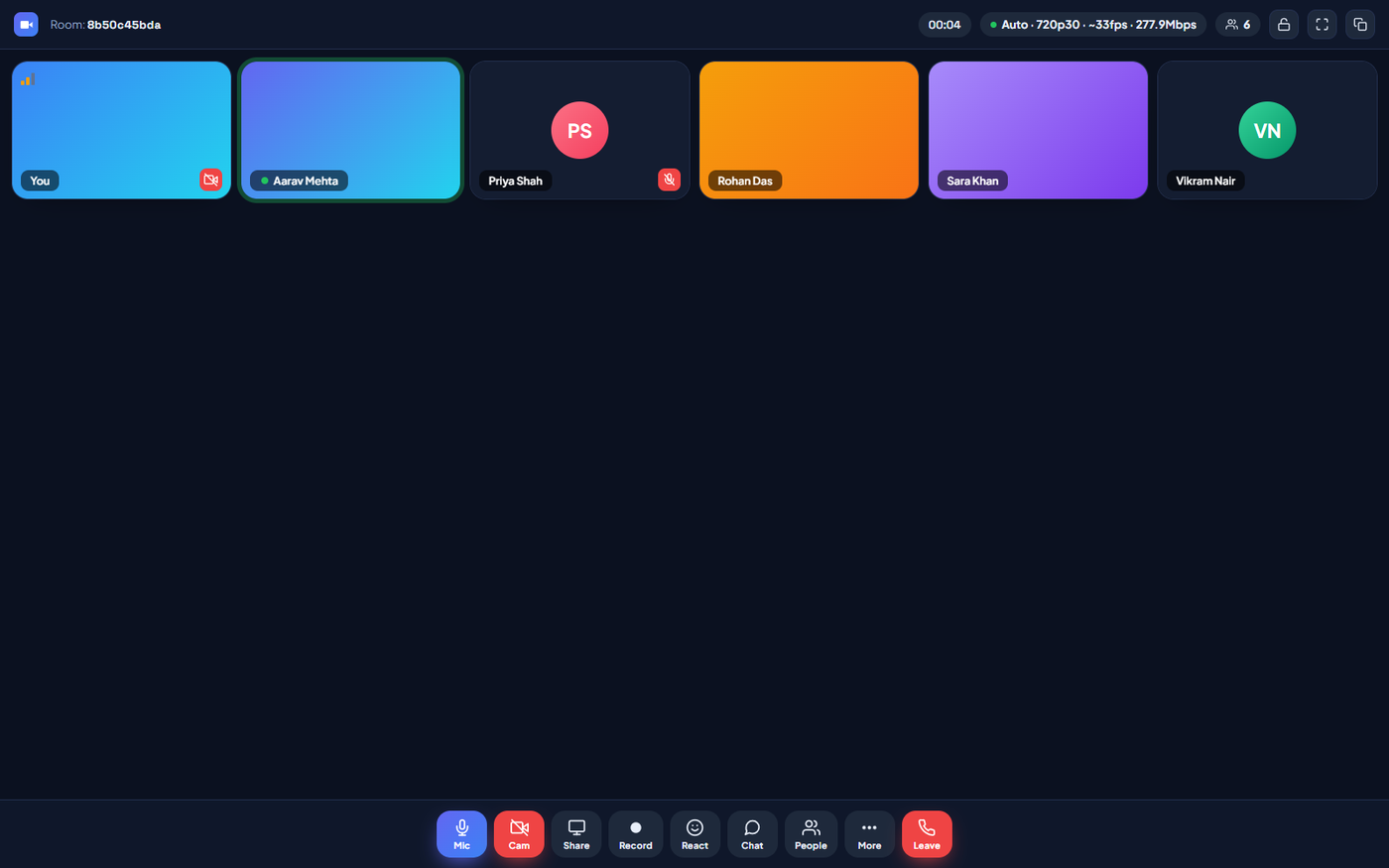
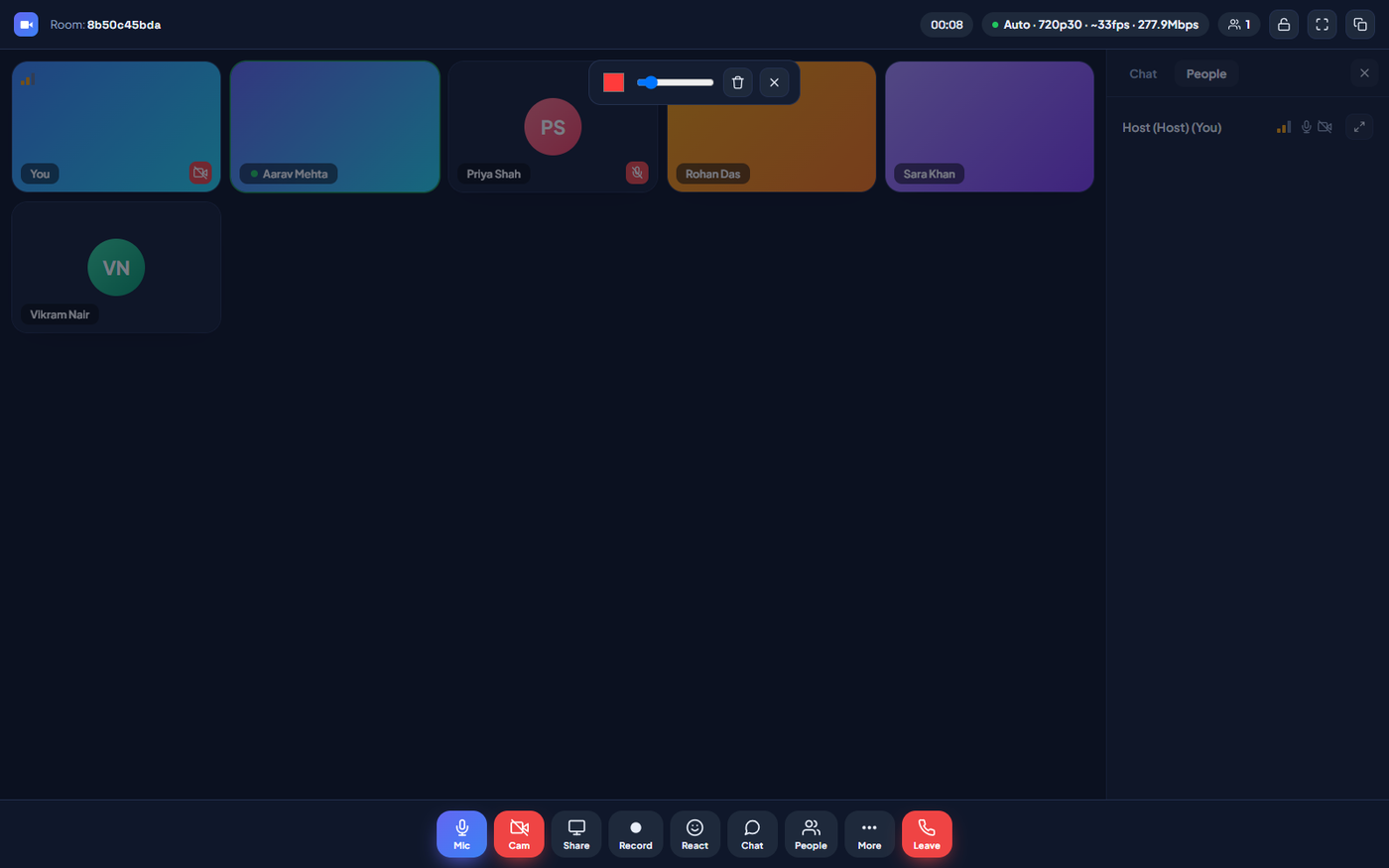
LiteMeet uses a peer-to-peer mesh, so media never loads your server. Each browser sends video to the others directly. That makes it excellent for the meetings most teams actually have: classes, consults, standups and client calls in the small-room range. Because every extra peer adds upload work for each participant, very large webinars are better served by adding your own TURN server for reliability, and an optional SFU add-on for big rooms is on the roadmap. The adaptive tier system also steps quality down gracefully as rooms grow, so calls degrade smoothly instead of collapsing.
What happens if my hosting is slow or restrictive?
LiteMeet assumes modest hardware and plans for it. A server-info probe watches your host's load and caps video quality before the machine struggles; if the frames or recordings folders are not writable, the installer detects it and falls back to database storage automatically with a chmod hint; and if outbound P2P is blocked entirely, the frame-and-audio relay keeps the call alive at reduced quality rather than failing. The design goal throughout is graceful degradation. The platform never hard-fails because of the environment it landed on.
Does self-hosting help with DPDP Act compliance in India?
It gives you the strongest possible starting point. Recordings, chat transcripts and attendance data stay on infrastructure you control, in the data center and country you choose, Indian data centers included, and you set your own retention and deletion policy rather than inheriting a vendor's. Full DPDP compliance also involves consent and process, so confirm your program with your own advisor; think of LiteMeet as the architecture that makes the data-residency answers easy.
Do live captions work in Hindi?
Yes. Live captions run in both Hindi and English using the browser's built-in speech recognition in Chrome and Edge. Captions are broadcast to everyone in the room and auto-hide when the speaker pauses. Useful for classes, tele-consults and any meeting where following along in Hindi matters.
Will video hold up on slow or congested Indian mobile networks?
That is exactly what the adaptive pipeline was tuned for. A resilient 240p floor tier, a data-saver mode and a 2-second stall watchdog keep the call alive on crowded evening 4G; quality climbs back automatically within seconds of the network recovering; and brief signal blips reconnect seamlessly without dropping the guest from the room.
Does LiteMeet include live streaming and webinars?
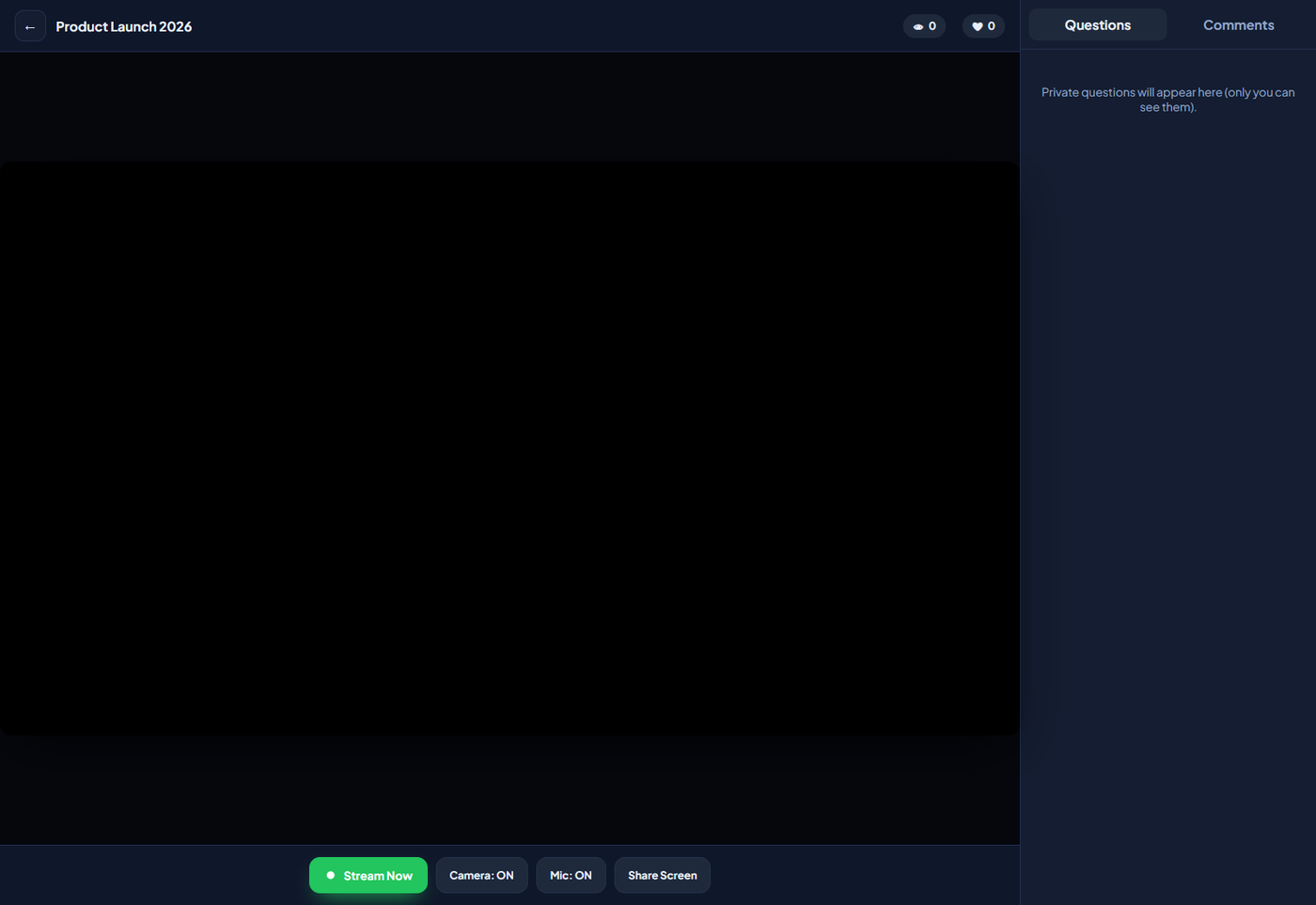
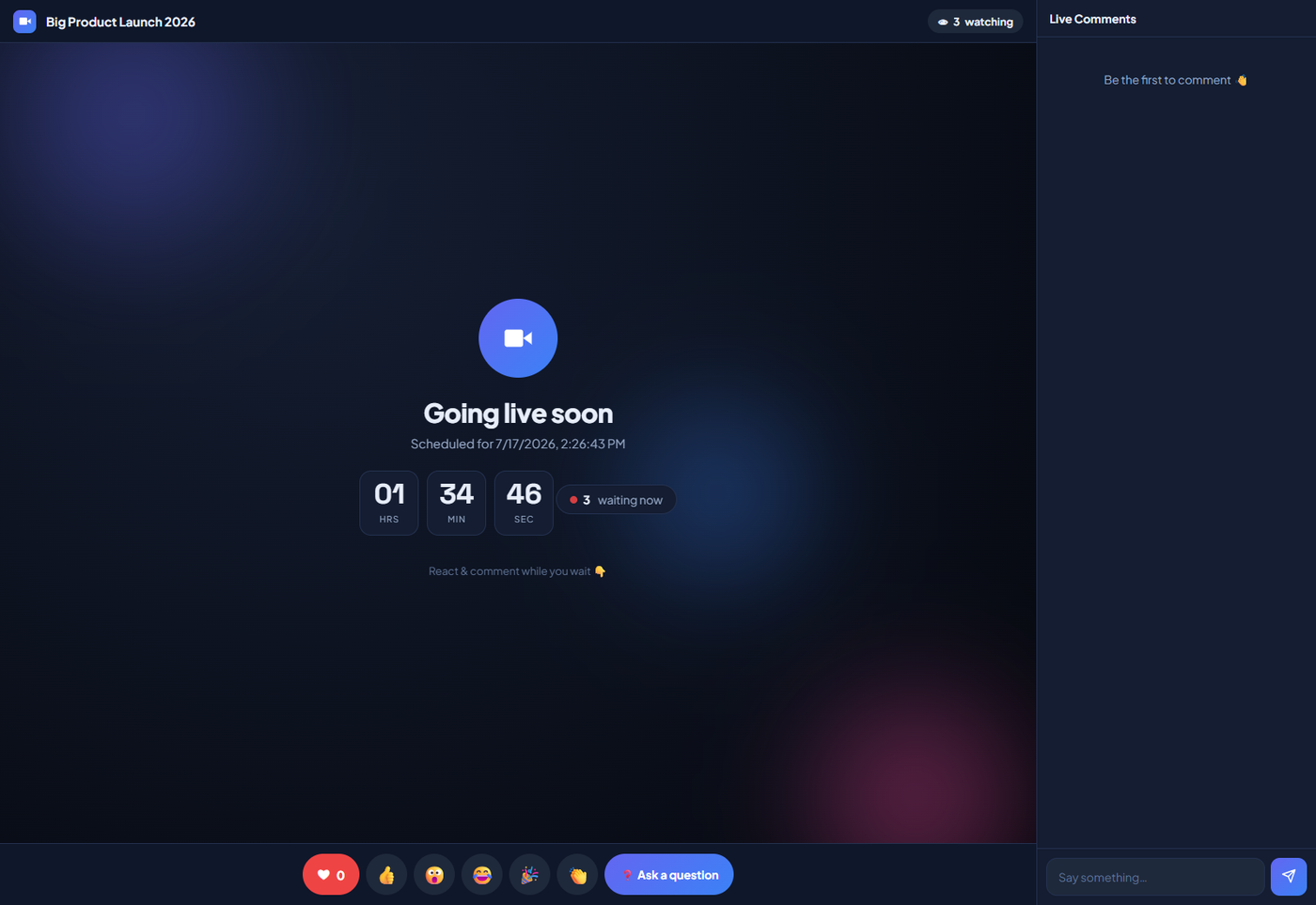
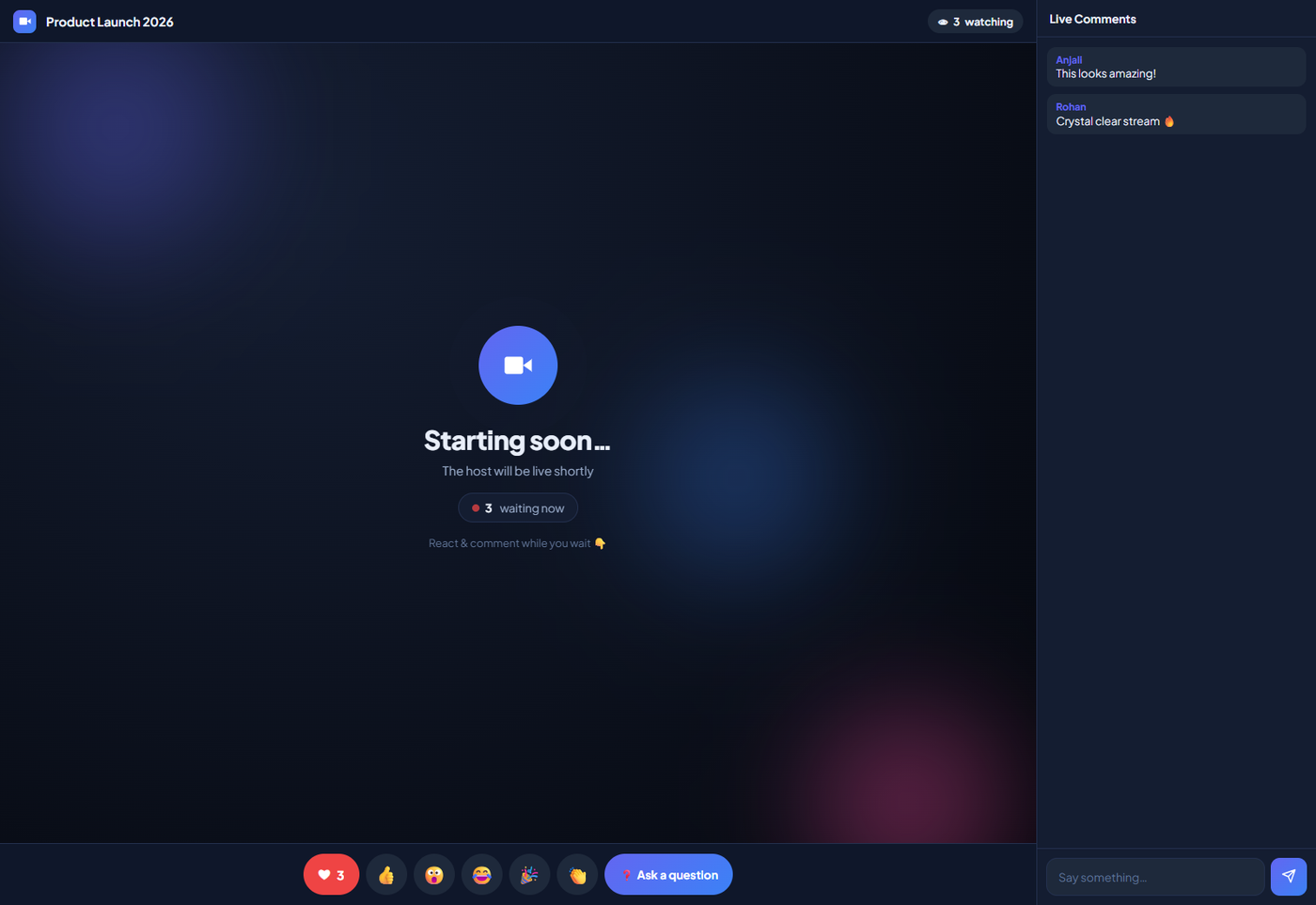
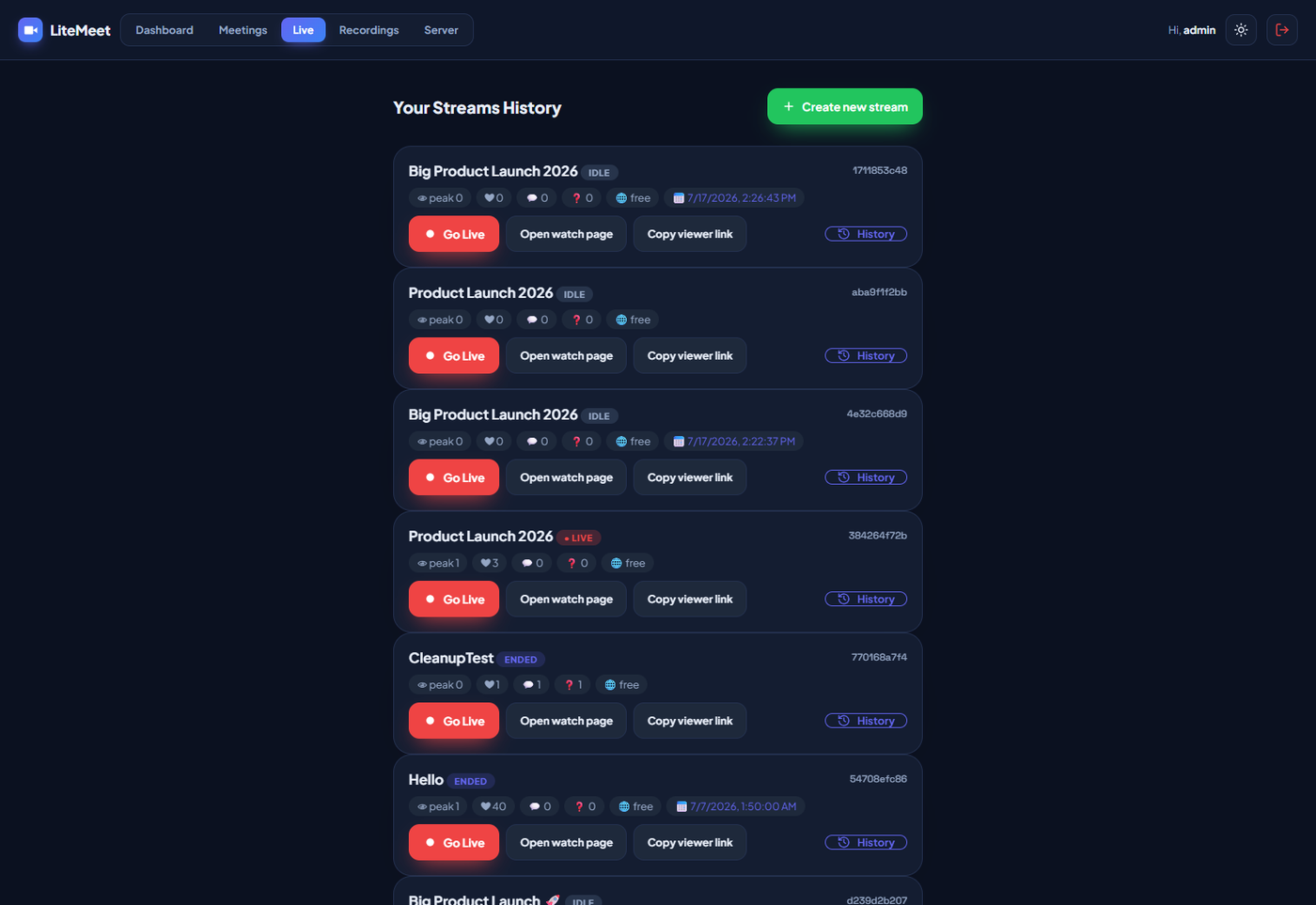
Yes. The built-in LiteStream studio lets a host go live to an unlimited audience from a single link, with a scheduled start time, an animated countdown waiting room, floating live reactions, email-gated public comments, private questions that only the host sees, a live viewer count with display control, and a full stream history. For very large audiences, place the stream behind a CDN such as Cloudflare, which has a free tier.
Is LiteMeet Made in India?
Yes. LiteMeet is built and maintained in India by MaMITs Pvt Ltd, with support in English and Hindi. It is a vocal for local choice for schools, clinics, businesses and government teams that want Indian software running on Indian hosting, with data that never leaves the country unless you choose so.
How is LiteMeet different from building on raw WebRTC?
Raw WebRTC is only the media pipe. Past a simple one-to-one call it needs an SFU media server, a TURN relay, a Linux box and real DevOps time, and it still gives you no recording, chat, whiteboard or admin tools. LiteMeet keeps the direct WebRTC speed, adds an automatic light relay fallback and self-healing recovery, ships the complete product layer on top, and runs it all on plain PHP and MySQL shared hosting.
Do you help with installation and after-sales support?
Yes. Most buyers finish the five minute wizard on their own, and the MaMITs team is available on phone, WhatsApp and email for guided installation, white-label setup and ongoing support, in English and Hindi. Reach us at +91 8602 741312 or info@mamits.com.
How do I contact MaMITs for a demo or purchase?
Call or WhatsApp +91 8602 741312, or email info@mamits.com. We will walk you through a live demo on your own screen, share pricing, and if you like it, have you installed and running the same day.